How to Choose the Right Heating Element for Malaysian Industrial Applications
The right heating element is the one that matches the material being heated, required temperature, available space, heat-transfer path, electrical supply and control method. There is no single most effective format for every Malaysian factory application. Before requesting a quotation, prepare an application brief covering the heated material, geometry, dimensions, voltage, wattage, operating environment, sensor arrangement and temperature-control requirements.
Which heating element is more effective? None is universally more effective. The best option depends on the material, target temperature, available space, power rating, heat-transfer path, corrosion exposure and control requirements. Tubular heaters can suit liquid, air, surface and solid-heating duties; cartridge heaters can be inserted into compatible holes in dies, moulds, metal blocks and tooling; band or mica heaters can wrap around cylindrical or flat machinery; and immersion heaters transfer heat directly into liquids. Treat these as starting points, not rankings: the element must also integrate correctly with the machinery, control system and installation space.
Resistive electric heating elements convert electricity into heat through a material’s electrical resistivity. This differs from infrared and induction heating, which use different heat-transfer mechanisms. The US Department of Energy explains these distinctions in its process-heating overview. The practical choice, therefore, is not simply a product name; it is a fit between the element and the equipment.
The principle of electric resistance heating is the conversion of electrical energy into thermal energy. When current passes through a resistive material, its electrical resistance produces heat, commonly described as Joule heating. In a direct-resistance arrangement, the material carrying the current is heated; in an indirect-resistance arrangement, a separate element transfers heat to the process through conduction, convection or radiation. This is why the element’s construction and the equipment’s heat-transfer path matter more than the product label alone.
Match the Heating Element to the Equipment and Heat-Transfer Path
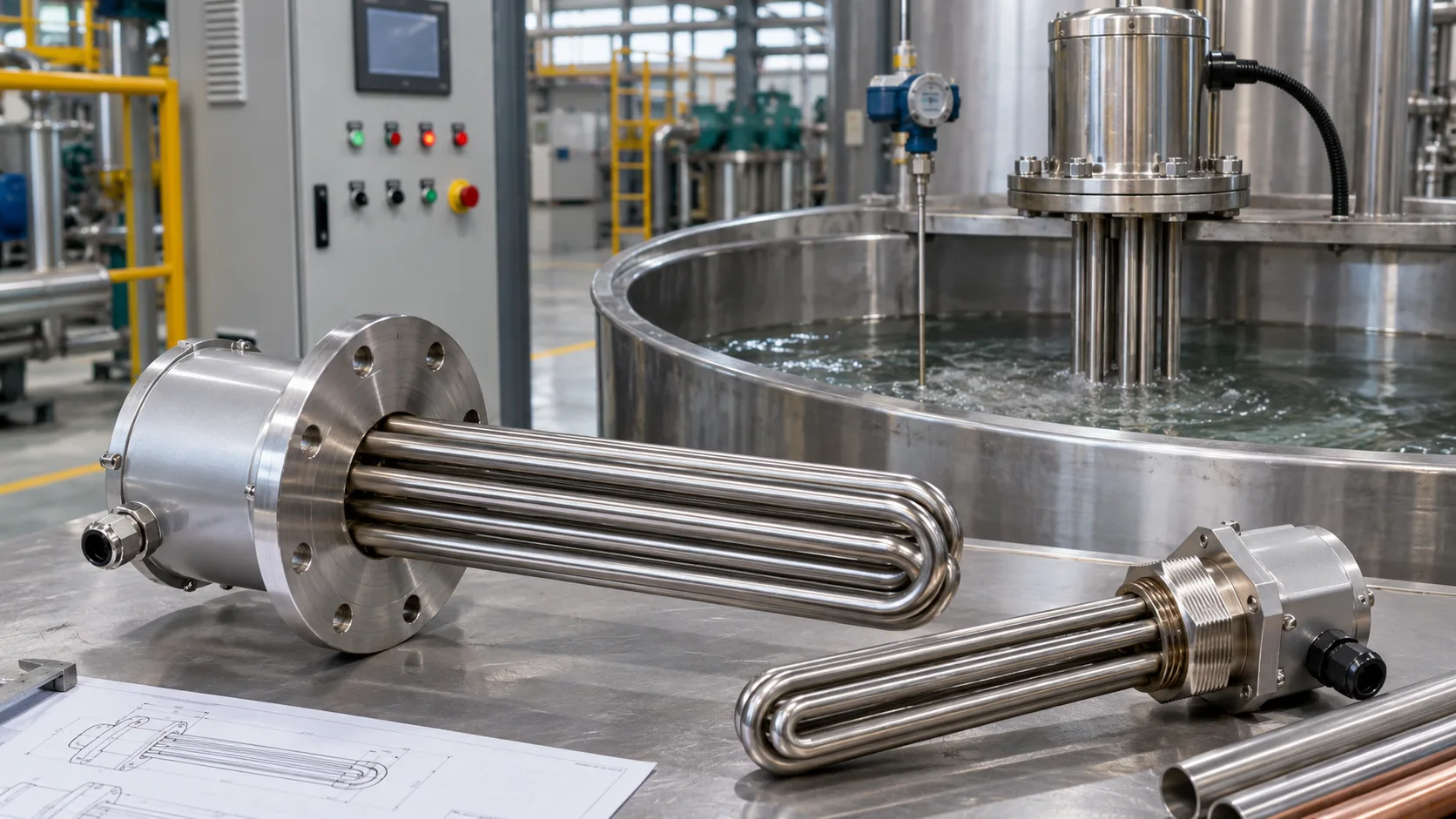
Start by identifying where heat must travel. Direct liquid heating, air heating, surface heating, cylindrical equipment heating and localised tooling heating place different demands on the element. Tubular elements use a resistive coil inside a protective sheath and can be configured for immersion, air, surface, furnace, mould and other industrial applications. Their versatility is useful, but the actual process, mounting arrangement and environment still need to be confirmed.
Common formats and their practical fit
- Tubular heaters: A flexible option for air, liquids, surfaces, furnaces and some mould applications. Confirm the required shape, sheath material, mounting and exposure to the process medium.
- Cartridge heaters: Suitable for insertion into compatible drilled holes in dies, moulds, tooling, platens and metal blocks. The fit, hole condition, watt density and sensor position affect the result, so these details should be checked with the supplier.
- Band and mica heaters: Designed to sit around cylindrical or flat equipment such as barrels and processing machinery. Confirm the diameter or surface dimensions, clamping method, heat distribution and clearance for connections.
- Immersion or flange heaters: Transfer heat directly into liquids. The liquid, required coverage, mounting and operating conditions must be confirmed before energising the heater.
- Finned heaters: Used where a heated element must transfer heat to moving air. Review airflow, installation space, operating temperature and control requirements rather than selecting by name alone.
- Infrared heaters: Use radiant heat rather than the same conduction or convection path as a conventional resistance element. They may be worth considering when the process needs surface or line-of-sight heating, subject to an application review.
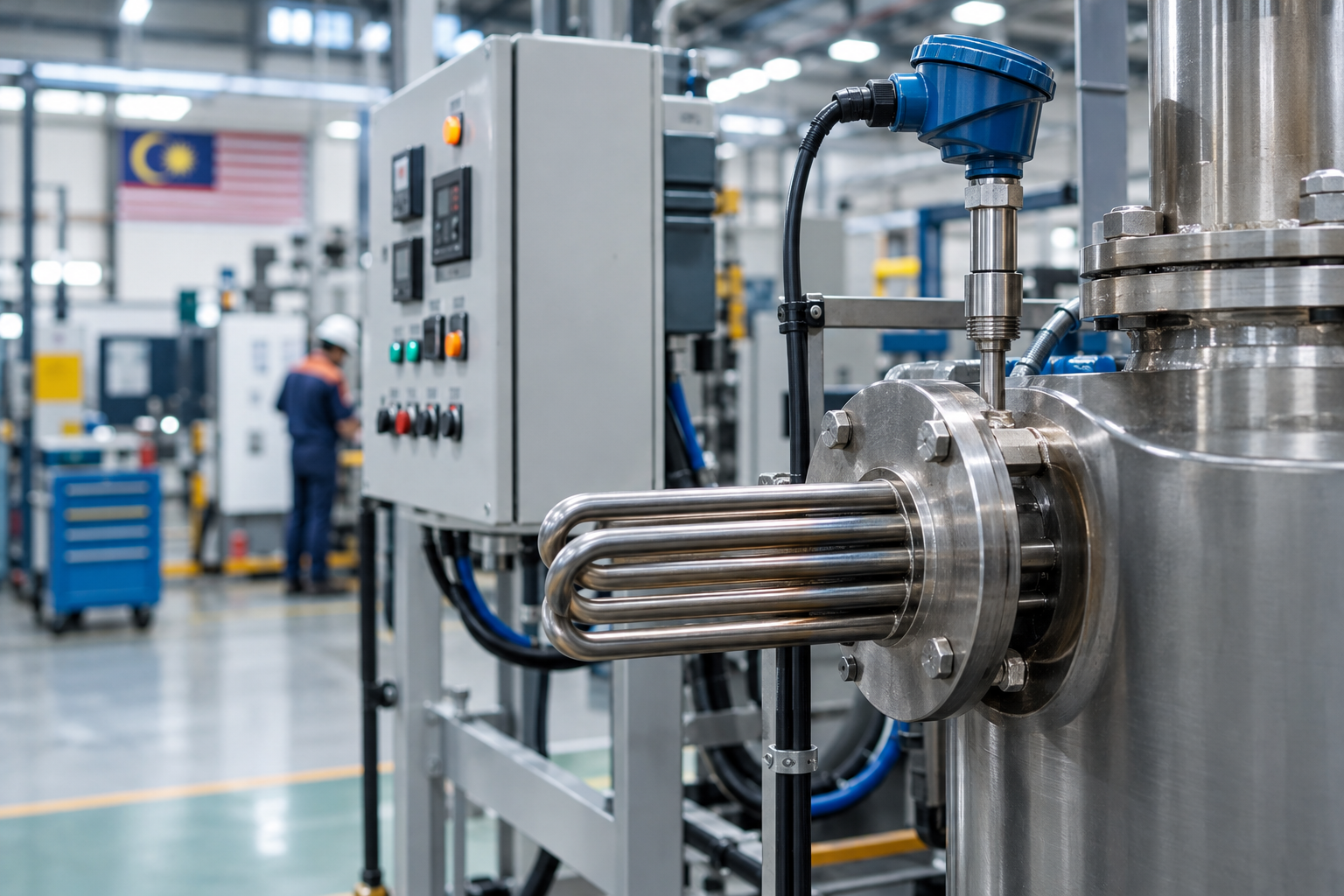
For a complete industrial heating system, the element is only one part of the build. A machinery or equipment integrator may need the heater, thermocouple or RTD sensor, controller and associated connections to work together within the available enclosure or process line. Depending on the environment, the wider selection may also include finned heaters for air movement or anti-condensation heaters for equipment protection. These product categories should not be treated as interchangeable: confirm the heated medium, mounting, sensing point, electrical load and control interface before specifying the assembly.
These are application matches, not universal rankings. A tubular heater may be appropriate for one liquid or air-heating task but unsuitable for a tight tooling cavity. A cartridge heater may fit a mould yet fail prematurely if the fit, watt density or control arrangement is wrong. For a broader explanation of tubular applications, see this guide to tubular heaters in Malaysian factories.
Verify Electrical Ratings, Dimensions and Construction Materials
Do not use a standard catalogue value as a substitute for the machine specification. Voltage, wattage, dimensions and operating conditions are application-specific. A replacement element must match the equipment’s electrical design and physical installation, while a new machine may require calculations and supplier or engineer review.
Construction material is another environmental check. Sheath options may include SS304, SS316L, SS321, Incoloy, titanium and copper, but no material is universally best. Compare the sheath with the heated medium, moisture, corrosion exposure, deposits and operating conditions. If the process chemistry or exposure is uncertain, ask the supplier or a qualified engineer to confirm the material selection.
The resistive material also matters, but its suitability cannot be judged from the material name alone. Confirm the finished element’s construction, atmosphere, sheath, watt density and control system against the required operating conditions with the supplier or a qualified engineer.
| Application | Heated medium and geometry | Possible format | Confirm before ordering |
|---|---|---|---|
| Liquid tank or vessel | Liquid; element immersed in the vessel | Immersion, flange or tubular heater | Liquid compatibility, coverage, mounting, voltage, wattage and control |
| Plastic-processing barrel | Cylindrical metal surface | Band, mica or ceramic heater | Barrel dimensions, clamping, heat distribution, sensor location and wattage |
| Mould, die or platen | Solid tooling with drilled holes or channels | Cartridge heater | Hole fit, heater length, watt density, dimensions, sensor position and controller |
| Air duct or drying equipment | Moving air | Finned or tubular heater | Airflow, clearances, sheath material, temperature limit and control method |
| Surface or line heating | Accessible surface or target area | Infrared, tubular or surface heater | Heat-transfer path, spacing, exposure, mounting and process temperature |
Plan Temperature Sensing and Control as Part of the Same System
The element generates heat; the sensor and controller determine how the process measures and regulates that heat. Include the sensor type, measurement point, controller requirements and control method in the same brief. A heater can have an appropriate voltage and wattage yet produce unstable or uneven results if the sensor is poorly located or the control arrangement does not suit the process.
For tooling, for example, the brief should identify the cartridge-heater fit, sensor position, control zone and total connected load. For a liquid system, identify where the temperature is measured and how the element is protected from unsuitable operating conditions. The element’s heat-generation mechanism should not be confused with the controller’s switching or regulating function.
Use a Safe Verification Process Before Installation and Testing
Installation conditions matter. Moisture exposure and mishandling can contribute to heating-element failure, so inspect the element, terminals, insulation and mounting before use. Industrial electrification guidance notes the importance of correct element selection and installation conditions. Immersion heaters also require confirmation that the element is correctly covered by the liquid before energising. Electrical testing, pressure-vessel work and control-panel changes should be handled by suitably qualified personnel.
When to Request a Custom-Engineered Solution
Ask for technical review or custom fabrication when standard dimensions, voltage, wattage or operating conditions do not match the machinery. Customisation may also be relevant where the equipment has tight spatial tolerances, unusual mounting, a demanding corrosive environment or a requirement for removable or withdrawable elements.
Send the supplier a concise brief rather than only a heater name. Include the process and heated material, target temperature, equipment drawing or dimensions, available voltage, required wattage, duty cycle, environment, sheath or material concerns, sensor location, controller details and the consequences of failure. This allows the supplier to distinguish a replacement request from a new design requirement.
How to Compare Options and Prepare the Enquiry
Compare each candidate against the same criteria: installation fit, heat-transfer path, environmental exposure, electrical compatibility and control compatibility. Do not select the lowest apparent cost if the element cannot be installed correctly or controlled reliably. Service life is influenced by operating temperature, watt density, duty cycle, cycling, sheath material, moisture, scale, corrosion and mechanical handling. A technically suitable element with appropriate control and installation conditions is generally a better basis for reducing avoidable replacement work than a generic substitute.
Complete this enquiry checklist once before contacting a supplier:
- State what is being heated and whether it is a liquid, solid, air stream or equipment surface.
- Provide the available voltage, required wattage, element dimensions and connection arrangement.
- Describe the heat-transfer path and available installation space.
- Identify moisture, corrosion, deposits, airflow, cycling and other operating conditions.
- Specify the sensor type and measurement point, controller requirements and number of control zones.
- Attach drawings, photographs, a failed-element description or the original rating plate where available.
- Mark any unresolved risk that requires supplier or engineer confirmation.
Frequently Asked Questions
Which heating element is most effective?
Use the required heat-transfer path to narrow the format. Tubular heaters can suit liquid, air, surface or solid heating; cartridge heaters are used where an element fits into a metal block, die or mould; band and mica heaters can be considered around cylindrical or flat equipment; and immersion heaters transfer heat directly into liquids. Confirm the mounting arrangement, electrical load, sensing point and control interface before specifying the assembly.
How can I check whether an industrial heating element is working?
With power isolated, a qualified technician can measure resistance across the terminals and compare it with the manufacturer’s rating, then check for an insulation fault between the terminals and sheath where suitable. A plausible resistance reading does not prove that the supply, wiring, controller or sensor is working correctly.
Should a failed heating element be repaired or replaced?
Replacement is normally the practical route for a failed resistive element, provided the new part matches the voltage, wattage, dimensions, watt density, mounting and operating environment. A qualified technician should investigate wiring, insulation or control faults so the replacement does not fail for the same reason.
When should I ask for a custom heating element?
Request technical review when the machine has unusual dimensions, a tight installation space, special mounting, demanding environmental exposure, or electrical and operating requirements that do not match a standard element. Provide the complete application brief so the proposed design can be checked before manufacture.
Prepare Your Heating-Element Specification
For a Malaysian industrial application, begin with the heated material, heat-transfer path, dimensions, voltage, wattage, environment and control requirements. Browse industrial heater categories, then contact HQ Heating with your equipment details if you need help defining a suitable specification or custom-design enquiry.